
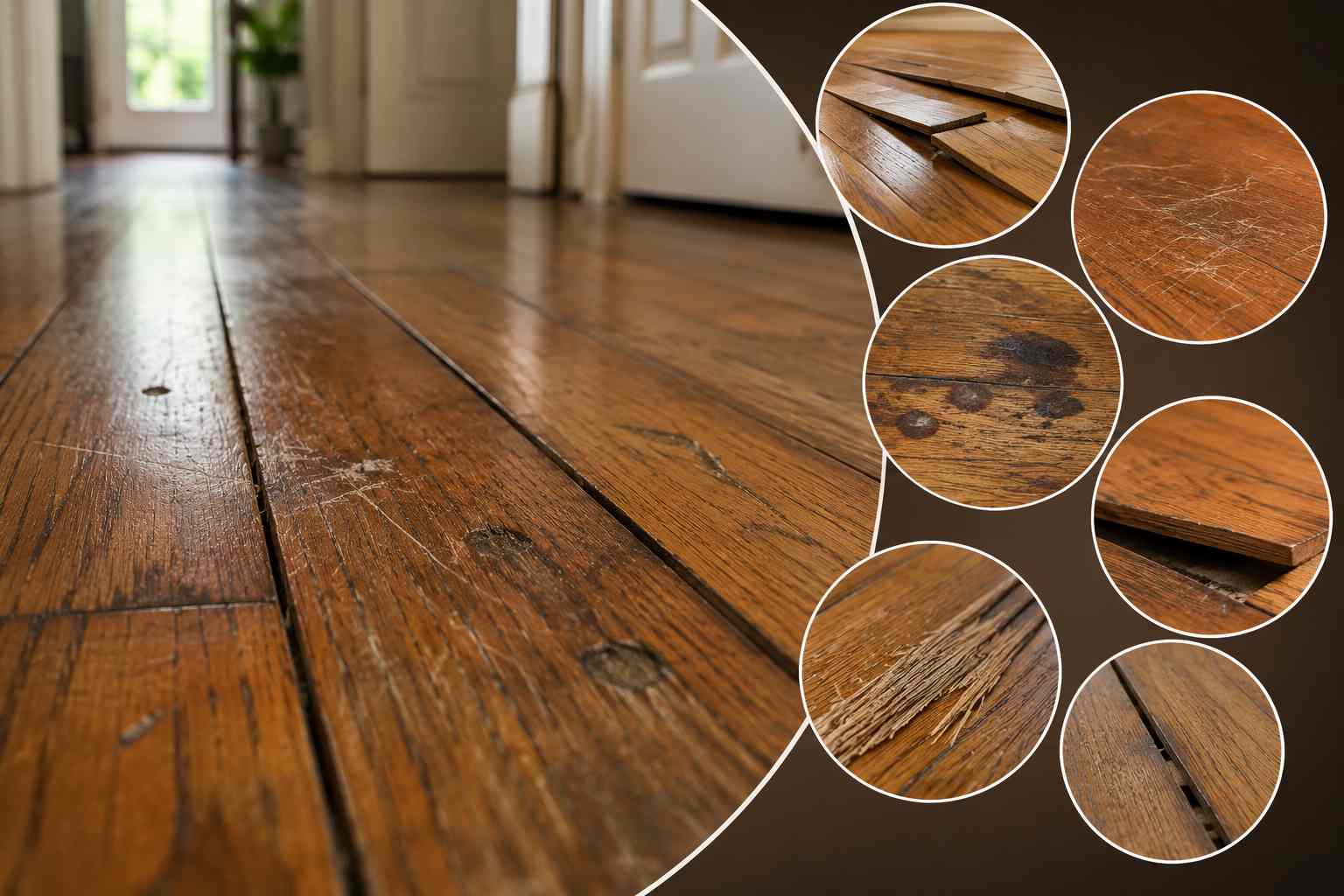
Hardwood floors are built to last decades, but they are not immune to damage. The problem is that most hardwood floor damage starts small: a minor gap here, a soft spot there, and homeowners often wait too long before calling a professional.
By the time damage becomes obvious, what could have been a straightforward hardwood repair has often turned into a full hardwood floor restoration project. Catching the early warning signs is the most effective way to protect the investment a hardwood floor represents.
Elite Floor Sanding & Refinishing has been diagnosing and repairing hardwood floors across Greenville, SC for over 34 years. Here are the seven signs that a floor needs professional attention before the damage gets worse.
Sign 1: Cupping or Crowning Planks
Cupping and crowning are two of the most visible signs of warped hardwood flooring, and both point to a moisture problem that needs to be addressed at the source before any repair work can hold.
What Cupping Looks Like
The edges of individual planks rise higher than the center, creating a concave, wave-like surface across the floor. This happens when moisture enters the wood from below while the top surface remains drier.
What Crowning Looks Like
The center of the plank rises higher than the edges, creating a convex shape. Crowning often occurs when a floor is sanded too soon after cupping, or when the surface absorbs more moisture than the underside.
Why Professional Repair Is Necessary
- Moisture source identification: addressing the visible warp without finding the source leads to repeat damage
- Moisture rebalancing: professionals stabilize humidity levels before attempting any sanding or board replacement
- Board assessment: some cupped or crowned boards can be sanded flat; others require full replacement
| Sign | Common Cause | Why Professional Repair Is Needed |
| Cupped or crowned planks | Moisture imbalance, water leaks, or humidity changes | Restores moisture balance, repairs damaged boards, and prevents permanent floor deformation |
Sign 2: Deep Scratches or Visible Wear Across the Surface
Surface scratches are a normal part of owning hardwood floors, but deep gouges and widespread visible wear that cut through the finish and into the wood itself are a different matter entirely.
Heavy foot traffic, furniture movement, and pet claws are the most common culprits in Greenville homes. Once scratches penetrate the protective finish, the exposed wood absorbs moisture and dirt, accelerating further damage.
Why Professional Repair Is Necessary
- Hardwood Floor Sanding removes the damaged surface layer and prepares the wood for a fresh, even finish.
- Hardwood floor refinishing applies a new protective coat that restores appearance and prevents further wear
- Targeted board repair addresses deep gouges that cannot be sanded out without replacing the plank.
| Sign | Common Cause | Why Professional Repair Is Needed |
| Deep scratches, dents, or worn finish | Heavy foot traffic, furniture movement, or pets | Sanding and refinishing restore the protective finish and appearance |
Sign 3: Fading, Discoloration, or Dark Staining
Uneven color across a hardwood floor is more than a cosmetic issue. Hardwood floor discoloration caused by UV exposure, water intrusion, or chemical spills can signal more serious damage to the wood itself.
Dark patches near windows typically indicate sun damage to the finish. Grey or black staining usually indicates moisture penetration into the wood and, in some cases, mold growth beneath the surface.
Why Professional Repair Is Necessary
- Refinishing addresses surface-level fading and restores a uniform color across the floor.r
- Board replacement is required when discoloration runs deeper than the surface finish into the wood fiber
- Moisture testing identifies whether dark staining indicates an active leak or historic water damage.
| Sign | Common Cause | Why Professional Repair Is Needed |
| Uneven fading or dark discoloration | UV exposure, moisture, spills, or aging | Professionals refinish or replace affected boards for a uniform finish |
Sign 4: Soft Spots, Bouncing, or Loose Boards
A floor that feels soft underfoot, bounces when walked on, or has boards that shift when pressure is applied is not just a comfort issue; it is a structural warning sign that demands immediate wood floor repair.
Soft spots are typically caused by subfloor deterioration beneath the hardwood layer, often resulting from long-term moisture exposure or rot. Loose boards may indicate failed fasteners or adhesive failure.
Why Professional Repair Is Necessary
- Subfloor inspection identifies the extent of structural damage before any surface repair begins.
- Subfloor repair or replacement addresses the root cause rather than masking the symptom.m
- Board refastening or replacement stabilizes loose planks and restores a firm, even walking surface.ce
| Sign | Common Cause | Why Professional Repair Is Needed |
| Bouncy, soft, or loose flooring | Water damage, subfloor deterioration, or loose fasteners | Prevents structural damage by repairing the flooring and underlying subfloor |
Sign 5: Visible Water Stains or Swelling
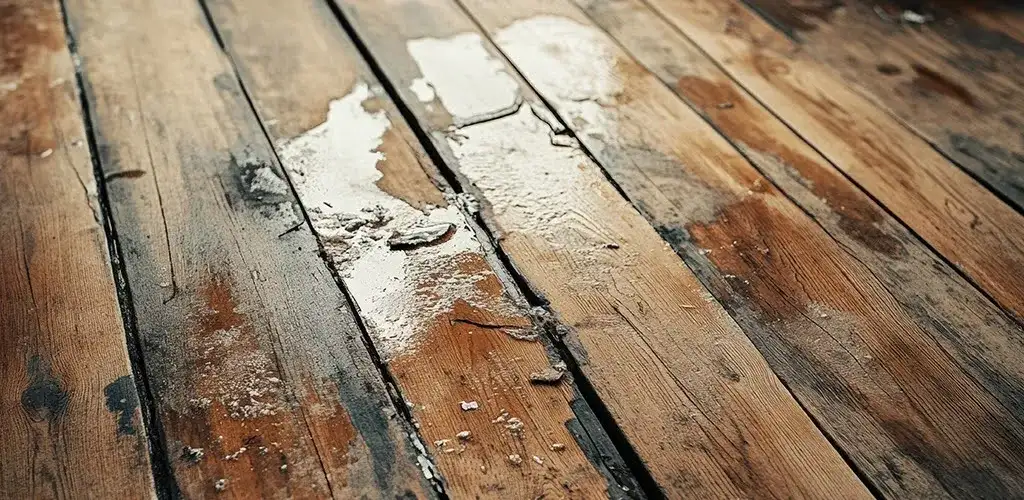
Water is hardwood’s most persistent enemy. Water-damaged hardwood floors often show dark rings, swollen planks, or raised grain all signs that moisture has moved past the finish and into the wood itself.
In Greenville homes, the most common sources are plumbing leaks under sinks and near appliances, condensation from HVAC systems, and persistent humidity in areas without adequate ventilation.
Why Professional Repair Is Necessary
- Source identification: repairing water-damaged boards without stopping the source guarantees the problem returns
- Damaged board removal and drying: proper drying prevents mold growth beneath the floor surface
- Matched replacement: new boards are matched to the existing wood species, grain, and finish for a seamless result
| Sign | Common Cause | Why Professional Repair Is Needed |
| Water stains, swelling, or dark spots | Plumbing leaks, spills, or excessive moisture | Removes damaged boards, dries the area, and prevents mold growth |
Sign 6: Splintering or Rough Texture Underfoot
When a hardwood floor becomes rough to the touch or bare wood fibers begin to splinter and catch on socks and bare feet, the protective finish has completely broken down. At this stage, the wood itself is fully exposed and vulnerable.
Splintering is most common in high-traffic areas and on older floors that have not been refinished in many years. Low indoor humidity during winter months accelerates the process by causing the wood to dry out and crack along the grain.
Why Professional Repair Is Necessary
- Full sanding strips the old degraded finish and smooths the wood surface back to a clean, even layer
- Sealing and refinishing applies a fresh protective coat that locks moisture out and restores a smooth, safe surface.
- Board replacement is needed when splintering has progressed to structural splitting or cracking of the plank.k
| Sign | Common Cause | Why Professional Repair Is Needed |
| Rough, cracked, or splintering wood | Worn finish, aging, or low humidity | Sanding, sealing, and refinishing restore a smooth, protected surface |
Sign 7: Wide or Growing Gaps Between Planks
Small seasonal gaps between hardwood planks are normal; wood naturally expands in summer and contracts in winter. What is not normal is gaps that persist year-round, grow wider over time, or appear in patterns that suggest improper installation or subfloor movement.
Wide gaps collect dirt, debris, and moisture, accelerating wear from the inside out. In commercial properties, they also create a trip hazard that carries liability.
Why Professional Repair Is Necessary
- Gap assessment determines whether gaps are seasonal, structural, or the result of installation failure.re
- Gap filling uses flexible filler materials that move with the wood rather than cracking when the floor expands.nds
- Board stabilization addresses underlying fastener or subfloor issues that allow boards to shift and separate
| Sign | Common Cause | Why Professional Repair Is Needed |
| Noticeable gaps between hardwood boards | Seasonal movement, humidity changes, or improper installation | Professionals stabilize the flooring and repair persistent gaps to prevent further movement |
Hardwood Repair vs Hardwood Refinishing: Which One Does Your Floor Need?
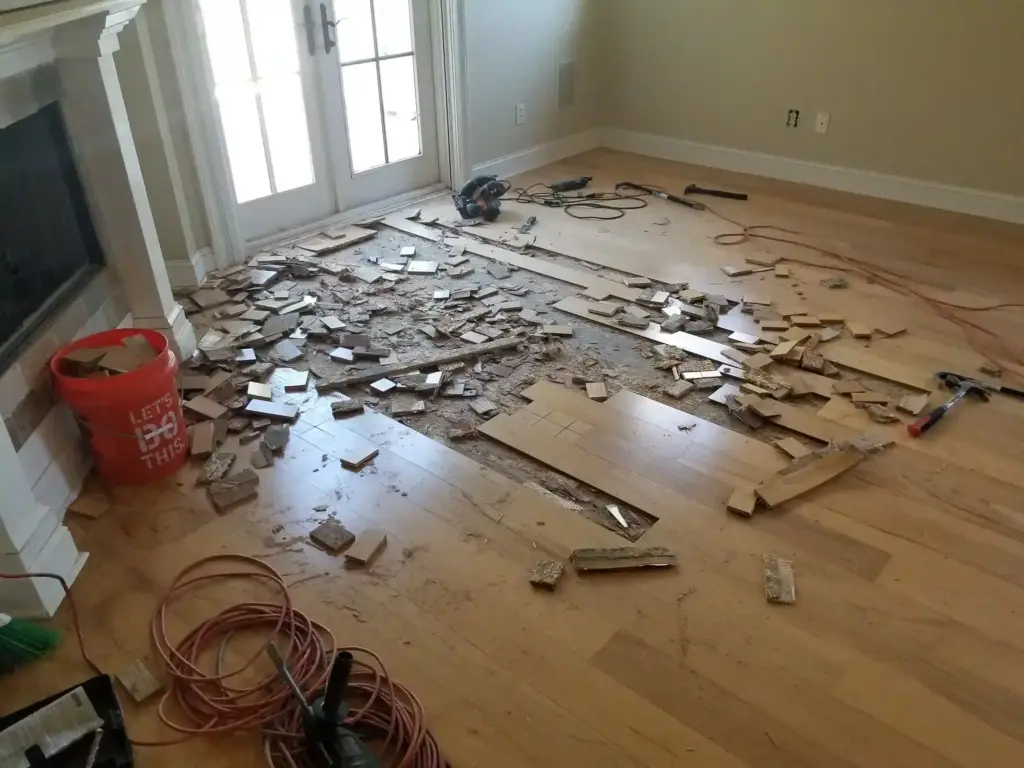
Not every damaged floor needs a full repair, and not every worn floor can be fixed with refinishing alone. Understanding the difference helps homeowners make the right decision before spending money on the wrong service.
| Feature | Hardwood Repair | Hardwood Refinishing |
| Best For | Localized or structural damage | Surface wear across the entire floor |
| Fixes | Warped, cracked, loose, or water-damaged boards | Scratches, dull finish, minor discoloration |
| Process | Replace or repair damaged boards | Sand and apply new stain and finish |
| Cost | Higher for major structural damage | More cost-effective for large worn areas |
| Lifespan Benefit | Restores structural integrity | Extends floor appearance and finish life |
| When Needed | Severe or localized damage | Cosmetic wear without structural issues |
Why Greenville Homeowners Trust Elite Floor Sanding & Refinishing for Hardwood Repair
Identifying the right type of repair is as important as the repair itself. Applying a refinish to a floor that needs structural work, or replacing boards that could have been sanded, wastes money and delays the real fix.
Elite Floor Sanding & Refinishing brings over 34 years of hardwood floor repair experience to every project in Greenville, SC. Every job starts with a thorough inspection before any work is recommended, ensuring homeowners get an honest assessment rather than an upsell.
- Free consultations and on-site assessments for every Greenville repair project
- Precise wood species, grain, and finish matching for invisible repairs
- Dustless sanding equipment for a cleaner, less disruptive process
- Full service range repair, sanding, refinishing, buffing, coating, and maintenance
Final Thoughts
The most expensive hardwood floor repair is always the one that got ignored. What starts as a small gap or a soft spot can escalate to subfloor replacement and full board removal if moisture or structural damage is left unchecked.
The seven signs covered in this guide are the most common indicators that a floor needs professional attention. Catching any one of them early and acting on it keeps hardwood floor maintenance manageable and protects the long-term value of the home.
For homeowners in Greenville, SC who have noticed any of these signs, Elite Floor Sanding & Refinishing is available for a free inspection and honest repair assessment. Call (864) 640-2262 or email jamesriddley8@gmail.com to schedule.
Frequently Asked Questions
How do I know if my hardwood floor needs repair or just refinishing?
If the damage is limited to surface scratches, dullness, or minor discoloration, refinishing is usually enough. If there are soft spots, water stains, cupped or cracked boards, or gaps that do not close seasonally, repair is the right first step.
What causes hardwood floors to cup or crown?
Both are caused by moisture imbalance. Cupping occurs when the underside of the board absorbs more moisture than the surface, pushing the edges up. Crowning is the reverse, where the surface absorbs more moisture than the underside, raising the center of the plank.
Can water-damaged hardwood floors be saved?
In many cases, yes. If the water source is identified and stopped quickly, and the floor is dried properly, damaged boards can often be replaced and matched to the existing floor. The key is acting quickly before mold develops beneath the surface.
How long do hardwood floors last with proper maintenance?
Well-maintained hardwood floors can last 70 to 100 years. The combination of regular cleaning, prompt attention to damage, and periodic professional refinishing is what makes that lifespan achievable.
How much does professional hardwood floor repair cost in Greenville, SC?
Repair costs in Greenville, SC typically range from $2 to $12 per square foot depending on the type and extent of damage, the wood species, and whether subfloor work is required. A free on-site assessment gives the most accurate estimate for each specific situation.