

A squeak here and there might seem harmless, but squeaky hardwood floors are often your floor signaling that something underneath needs attention. Whether it’s seasonal wood movement, a loose subfloor, or years of foot traffic gradually working fasteners loose, that familiar creak is worth understanding before it becomes a costlier problem.
Below, we break down the 9 most common causes, the noise types you might hear, and the most effective repair methods to stop the squeak for good.
9 Reasons Your Hardwood Floors Are Squeaking
1. Humidity Shifts
Wood responds directly to moisture in the air. In dry winter months, hardwood planks shrink and pull away from neighboring boards, creating small gaps that rub together underfoot. In summer, high humidity causes planks to swell and press against fasteners, producing friction sounds with every step.
2. Worn Fasteners
Seasonal expansion and contraction and general house settling gradually loosen the nails and staples holding your floor in place. Once fasteners lose their grip, boards shift slightly with each step, and that movement creates the friction that causes noise.
3. Moisture Absorption
Wood constantly absorbs and releases moisture from its environment. Moisture under hardwood floors causes planks and the subfloor to repeatedly swell and shrink, gradually loosening the fit between boards and producing loud squeaks underfoot.
4. Loose Subfloors
When a gap opens between the subfloor and floor joists, the subfloor moves independently as you walk across it, rubbing against nails, screws, or framing with every step. Loose hardwood boards sitting on top of an unstable subfloor compound the problem further.
5. Tongue and Groove Wear
Most hardwood flooring interlocks along its edges using a tongue and groove system. Over years of use, those edges wear down, losing their tight fit, causing boards to chatter under weight or scrape against the subfloor and generate squeaks.
6. Loose Bridging Between Joists
Cross bracing and metal struts between joists distribute load evenly across your floor. When this bridging loosens or warps due to age or moisture, that function breaks down, and the resulting movement transmits through the subfloor to the finished floor above.
7. Crawlspace Moisture
Excess moisture in a crawlspace silently causes swelling, warping, and fastener loosening in the subfloor and joists. That structural movement travels upward and eventually produces widespread squeaking across the finished hardwood floor above.
8. Uneven Framing
When floor joists warp, sag, or crown over time, they create uneven high and low points beneath the subfloor. Those spots act as pivot points; finished hardwood planks flex over them with every step, creating stress and eventually noise. Upgrading from a standard L/360 to an L/480 deflection rating significantly reduces structural bounce and squeaking.
9. Installation Errors
Too few fasteners, incorrect nailing angles, overdriven nails, missing expansion gaps, or an uneven subfloor all create conditions for movement and friction down the line. These installation mistakes often don’t surface immediately; they appear months or years later as the floor settles.
Types of Squeaky Floor Noises
Board to Board — Two adjacent planks rub against each other under foot traffic due to seasonal changes or worn fasteners. Usually a short, sharp creak concentrated in one spot.
Board to Subfloor — Loose boards lift slightly underfoot and rub against nails or the subfloor panel below, producing a consistent squeak that follows each step.
Subfloor to Joist — Gaps or warped framing allow the subfloor to rub against the joists beneath it. Tends to be louder and more structural in nature.
Edge to Edge — Adjacent planks rub along their long sides due to seasonal expansion and contraction, creating a drawn-out creak as weight shifts across parallel seams. Softer species like pine and fir are more prone to this than denser hardwoods like oak and maple.
How to Fix Squeaky Hardwood Floors
Lubrication — Work talcum powder, baby powder, or powdered graphite into the noisy cracks between boards with a soft cloth. A quick, non-invasive fix for minor surface squeaks.
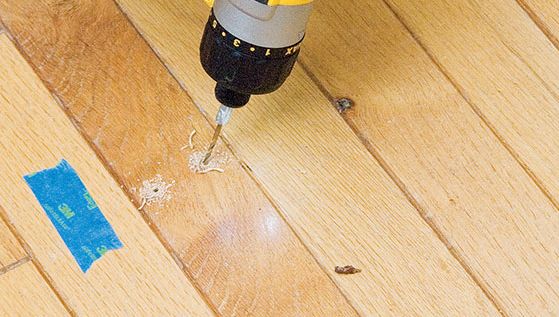
Surface Fastening — Drive breakoff screws down through the finished floor into the subfloor to pull loose boards tight. They snap flush with the surface and can be concealed easily.
Shimming — From an open crawlspace or basement, brush a wood shim with construction adhesive and wedge it into the gap between the joist and subfloor. Stops vertical movement at the source without touching the finished floor.
Installing a Bridge — A short 2×4 brace secured against both the joist and underside of the subfloor eliminates flex — especially effective for subfloor-to-joist squeaks.
Climate Management — If squeaks are seasonal or scattered across the room, humidity is likely the driver. Keep indoor relative humidity between 35% and 55% year-round to minimize wood movement and the friction that follows.
Conclusion
Squeaky hardwood floors are more than a nuisance; they signal ongoing movement and friction that can accelerate wear over time. Whether the fix is as simple as powdered graphite or as involved as shimming from below, addressing the cause early always saves money down the road.
At Elite Floor Sanding & Refinishing, we diagnose and repair hardwood floors across Greenville, SC, and surrounding communities, including Spartanburg County, Simpsonville, Mauldin, Greer, and Taylors. If your floors won’t stop squeaking, we’ll find the cause and fix it right.
Contact us today to schedule a hardwood floor inspection.
FAQs
Is it normal for hardwood floors to squeak?
Yes, minor squeaking is normal. Wood naturally expands and contracts with seasonal humidity and temperature changes, and foot traffic gradually loosens fasteners over time. Occasional creaks aren’t a concern, but persistent or spreading squeaks are worth having a professional inspect.
Can squeaky hardwood floors be repaired?
Yes, in almost every case. Solutions range from lubricating gaps with powdered graphite to driving break-off screws from the surface or shimming from below, depending on where the squeak originates. A professional inspection identifies the right fix quickly.
Do termites cause squeaky floors?
Yes, they can. Termites hollow out subfloor panels, joists, and hardwood planks, weakening the structural support beneath your floor. That weakness causes boards to shift and sag underfoot, producing squeaks that worsen over time.
How do I know if my squeaky floor needs professional repair?
If squeaks are getting louder, spreading to new areas, accompanied by soft spots, or returning after DIY attempts, it’s time to call a professional. Surface fixes only go so far; structural causes like loose joists or crawlspace moisture need expert diagnosis.
Can squeaky floors cause long-term damage?
Yes, if left unaddressed. Ongoing friction between boards and subfloor components wears down finishes, loosens fasteners further, and can eventually compromise the subfloor structure. What starts as a minor squeak can turn into a costly repair if ignored.